
Web Design

Somewhere worth sending the click

You can buy all the traffic you like. If the page it lands on cannot answer the question that brought somebody there, you are paying to teach people to leave.

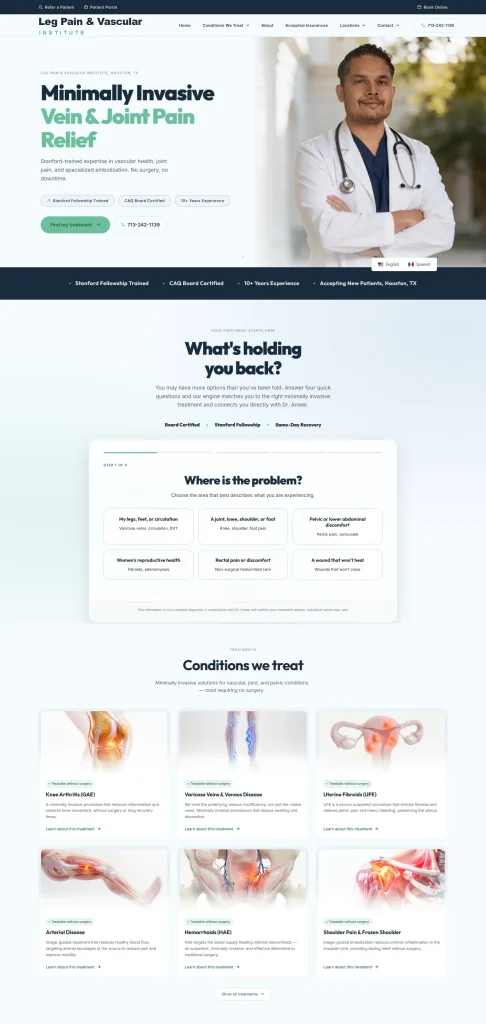
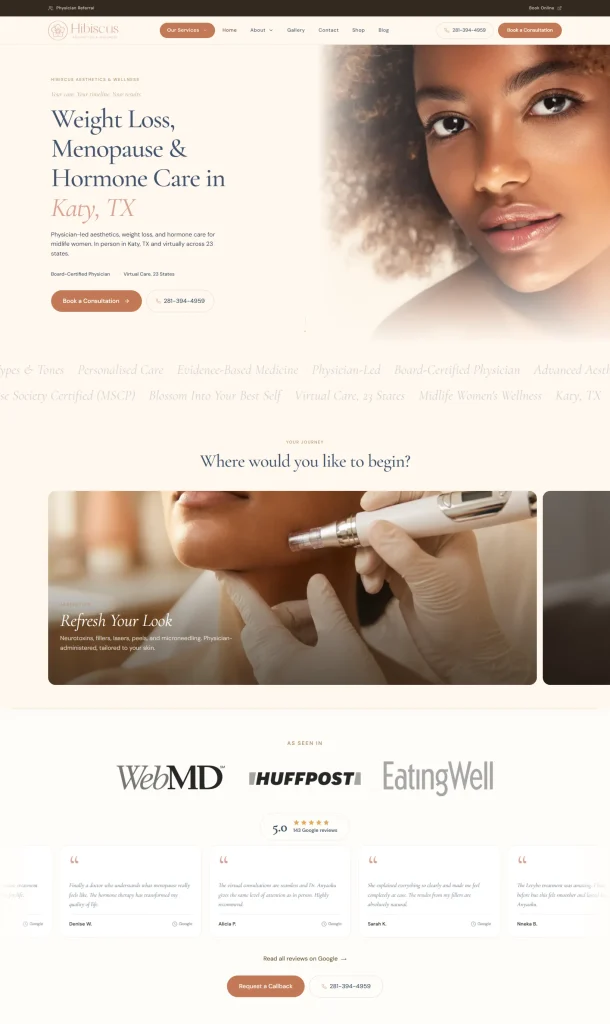
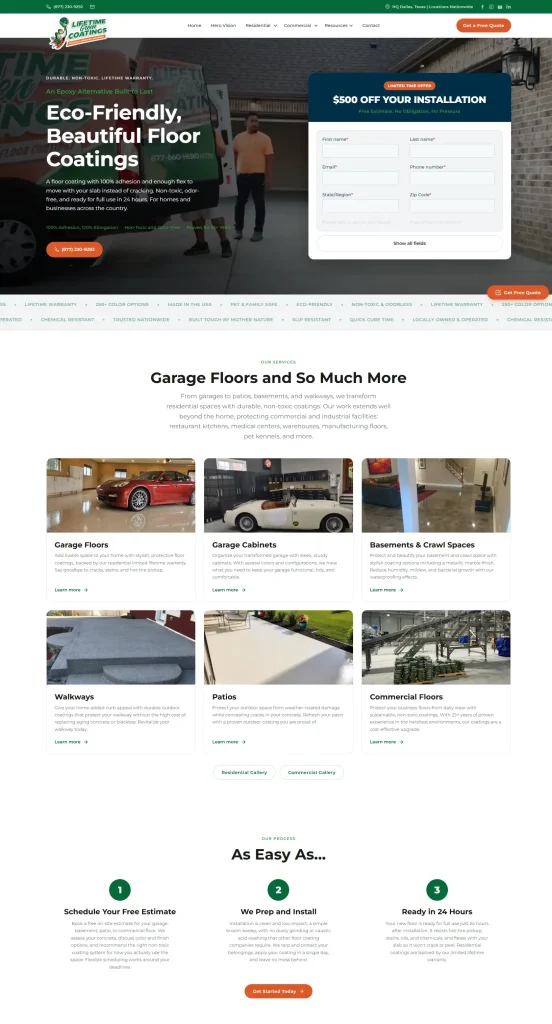
Website built for Leg Pain & Vascular Institute Website built for Hibiscus Health Website built for Lifetime Green Coatings
Built with
Custom WordPress No page builders No monthly licenses

Three things every site we build has, and most sites in these industries do not.

On every build

An engine, not a contact form

A vascular practice asks what is holding you back. A wellness clinic asks what brings you in today. A flooring company lets you photograph your own garage and see it finished. Different questions, same job: work out what the visitor needs before asking them to commit to anything.

Custom to your business. Not a plugin, not a chatbot.

No exceptions

Custom WordPress, no page builders

Page builders are why so many sites are slow, awkward to change and expensive to keep. We build the theme properly, so the site loads fast, the markup is clean enough for search engines and AI assistants to read, and there is no monthly license standing between you and your own website.

You own it outright. Nothing expires.

Built in from the start

Structured to be found

One page per service rather than one page listing all of them. The answer in the first line rather than three scrolls down. Markup that tells a machine what your business is and what it treats. This is what makes ranking possible later instead of a fight against the site itself.

Cheaper to build in now than to retrofit in a year.

How it runs

What actually happens

Step 01 of 04
01

Work out what your visitors arrive with

Before any design happens we go through what people actually search, what they ask on the phone, and where the current site loses them. That is what the structure gets built around. A practice that thinks of itself as offering eight procedures usually finds its patients arrive with four problems, and those are not the same list.

02

Build the structure, then the pages

One page per thing worth being found for, each answering a real question rather than describing a service. This is the part that decides whether the site can ever rank, and it is far cheaper to get right now than to unpick later.

03

Build the engine

Every site gets one, and it is designed around your business rather than dropped in. It might route a symptom to the right procedure, sort enquiries by service area and job size, or let somebody see their own space finished before they ever fill anything in. What it always does is qualify, so what reaches you is worth calling back.

04

Hand it over, properly

The site is yours. Your hosting, your domain, your accounts, no license that expires and nothing that stops working if you stop working with us. We will keep looking after it if you want that, and if you do not, it carries on without us. That is not generosity, it is what owning something means.

Proof

A site nobody could find, rebuilt around the patient

Fifty search visits in seven months, from a site organised around procedures nobody was searching for by name. Rebuilding it around what patients actually arrive with, and adding an engine that turns a symptom into the right treatment, changed the shape of the practice. The numbers and the method are in the case study.

Questions

What owners ask before commissioning a site

Direct answers, including what it costs.

Most sites we build come in under five thousand dollars, and we split that into instalments so it does not arrive as one bill. That is well below what agencies typically charge for a custom build, and the reason is simple: we are not a web design shop that also sells marketing. The site is usually the foundation for ads or SEO we are already running, so it is priced as part of the work rather than as the product. There is no monthly license and no subscription holding the site hostage. Hosting and the domain stay in your name and you pay those directly.

A short guided path that works out what someone needs before asking them for anything. Every site we build gets one, designed around that business rather than dropped in from a plugin. For a vascular practice it opens by asking what is holding you back, takes a description of where it hurts, and routes to the treatment that fits. For a wellness clinic it asks what brings you in today and sorts between aesthetics, weight and hormone care. For a flooring company it lets you photograph your own garage, pick a finish, and see your space rendered in it before you talk to anybody. Different mechanisms, same purpose. The visitor gets an answer instead of a form, and you get an enquiry that already contains what you need to know. It is also the difference between fifty enquiries you have to sift and fifteen worth calling.

Because you pay for them twice. Once at the start, then every month, and again in the speed you lose. Page builders generate layers of markup around the actual content, which slows the site and makes it harder for search engines and AI assistants to work out what your page is about. They are also a trap on the way out. A site built in a builder is not really portable. Move away from the plugin and the site stops rendering, so you rebuild rather than migrate. We build the theme properly. It costs no more, it loads faster, nothing expires, and when something needs changing it gets changed instead of worked around.

Four to six weeks for most sites, from the first conversation to going live. The longest part is usually not the build. It is getting the content right, particularly where a practice has never written down what it actually treats in the words patients use. We do the writing where that helps, but there is a stage where somebody who knows the business has to read it and tell us what is wrong. If you are running ads while this happens, they keep running. We do not take a site down to rebuild it.

Completely. Your domain, your hosting account, your logins, and the site files are yours. No license, no subscription, nothing that expires or stops working if you stop working with us. Same for everything around it: analytics, tag manager, the search console property, the ad accounts. All in your name. We have watched businesses discover the hard way that their website belonged to their old agency, and it is a bad conversation to have at the point you have already decided to leave.

No. Medical is a good share of it, but we build for law firms, contractors, home service companies and specialist retailers too. The approach transfers because the problem is the same. Someone arrives with a situation rather than a purchase in mind. A homeowner does not know the word polyaspartic, and somebody who has just been in an accident does not know which kind of attorney they need. The site's job is to work that out for them rather than presenting a menu and hoping. What changes is what qualifies an enquiry. A practice needs to know the condition and whether the patient is in the area. A contractor needs the job size and the service area. That gets built into the engine rather than left to whoever answers the phone.

Often, yes. If the site is reasonably fast and built on something sane, restructuring what is there is cheaper than starting over, and we would rather do that. Where it stops being worth it is when the site is slow at the foundation, built in a builder that fights every change, or so dated that it undermines you next to competitors. At that point improvements cost more than a rebuild and deliver less, and we will say so plainly rather than billing you for months of patching. If you are about to spend on ads, that decision matters more than it looks. Traffic pointed at a site that cannot convert is the most expensive mistake available.

A team of seniors. Nothing gets passed to a junior once the project starts, because there are no juniors here. It is why we take a limited number of projects rather than as many as we could sell. It also means the person building the site is the person who will run the campaigns pointing at it, which shows up in the details. Pages get built around search terms that actually convert, and the tracking works on day one rather than being retrofitted by somebody who was not there.

Not sure whether your site needs rebuilding or just fixing? Send us the URL and we will tell you which, and what it would cost.

Get a proposal
Straight answer

A website is not the thing that gets you customers. Ads and rankings do that. The site is where all of it lands, which is why a weak one quietly makes everything else more expensive and nobody can point to the reason.

If yours is fast, clear and converting, keep it and spend your money on traffic. If it is not, fixing it first is usually cheaper than paying for clicks that bounce off it for another year.

Send us the URL. We will tell you which one you have.

ProSocial Agency

Start here

See what your budget can actually buy.

Model your campaign before you commit a dollar, or send us the account and we will tell you what we would change first.